
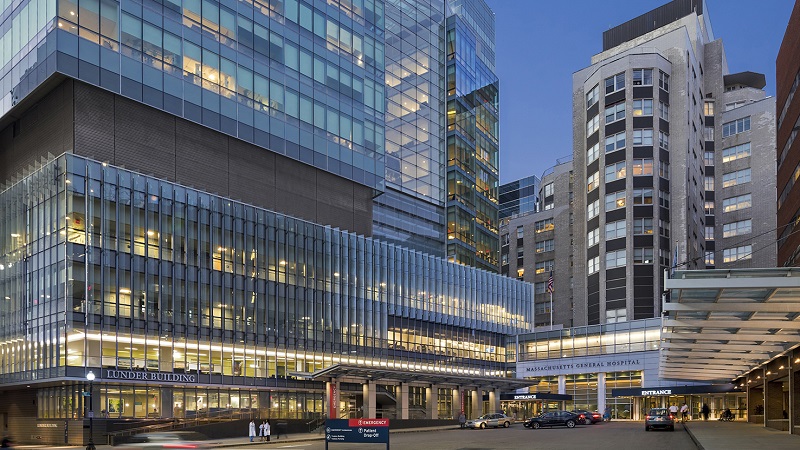
Swallowing and Heartburn Center
The Swallowing and Heartburn Center at the Massachusetts General Hospital Digestive Healthcare Center provides both primary treatment and second opinion evaluations for throat, esophagus and stomach disorders.
- Phone: 617-724-6038
A Multidisciplinary Approach to Care
The Swallowing and Heartburn Center brings together a team of gastroesophageal specialists who provide expert diagnosis, cutting-edge medical and surgical interventions and ongoing care for throat, esophagus and stomach disorders.
Working closely with both the patient and the referring physician, this multidisciplinary team works together seamlessly to develop a personalized treatment strategy for each patient and includes:
- Gastroenterologists
- Surgeons with special expertise treating benign and malignant gastroesophageal conditions
- Diagnostic and interventional radiologists
- Medical oncologists
- Radiation oncologists
- Nurse practitioners and oncology nurses
- Nutritionists
- Speech and language pathologists
Coordinated Care for Gastroesophageal Disorders
Our board-certified digestive health specialists work together to help patients diminish episodes of discomfort through diagnosis and treatment options, including a combination of medication, lifestyle changes, endoscopic therapies and, when appropriate, surgical procedures.
Learn more about the pancreas and biliary medical program by visiting the Division of Gastroenterology.
Leaders in the Medical Management of GI Motility Disorders and Surgical Treatment of GERD and Hiatal Hernias
We are a leading resource for patients who have had previously unsuccessful antireflux operations.
We are also a leading center for the development of new therapeutic approaches, such as natural orifice transluminal endoscopic surgery (NOTES), in which surgery is performed without the need for incisions. Learn more about this procedure
We specialize in the surgical treatment of GERD (gastroesophageal reflux disease) and hiatal hernias. Read a news article
As high-volume surgeons, we have achieved excellent results in repairing hiatal hernias and relieving patients of GERD symptoms. Nearly 75 percent of patients undergoing surgery can discontinue acid suppressive medications and more than 90 percent of patients undergoing surgery at Mass General expressed a high degree of satisfaction with their outcomes. [Source: D.W. Gee et al. (2008). Measuring the Effectiveness of Laparoscopic Nissen Fundoplication: Long Term Results. Archives of Surgery 43, 482–487.]
Other surgical interventions include:
- Esophagectomy, surgical removal of the esophagus
- Gastrectomy, surgical removal of the stomach in patients with stomach cancer
- D 2 node dissection, a more complete surgical sample of the lymph nodes used to ensure thorough diagnosis of gastric cancer
Learn more about these procedures in the Department of Surgery
Laparoscopic Procedures and Other Minimally Invasive Options Minimally invasive treatments are often options for patients who would have required traditional open surgery in the past. These new techniques have the benefit of faster recovery times, smaller surgical scars and greater nerve preservation. Minimally invasive options include:
- Laparoscopic antireflux surgery: We were one of the first hospitals in New England to perform this procedure and continue to be a leading source today
- Laparoscopic heller myotomies: We have performed some of the highest volumes of this procedure in New England to treat achalasia
- Laparoscopic procedures to treat cancers of the esophagus, stomach and gastroesophageal junction: We are one of the few hospitals in the world to offer these minimally invasive procedures
Minimally Invasive Ablation Procedures
Surgery may not an option for all patients or conditions. For those patients for whom surgery is not possible, minimally invasive ablation procedures include:
- Radiofrequency ablation, a novel method offered by few centers in New England, used to treat Barrett’s esophagus
- Photodynamic therapy, a laser procedure used on precancerous areas or to destroy lesions caused by Barrett’s esophagus
- Endoscopic mucosal resection, an endoscopic means of removing small cancers from the stomach and esophagus that does not require surgery
One Call Coordinates CareWe provide patients and referring physicians with an experienced access coordinator, a clinician who is available to assess patients’ needs, coordinate appointments and begin the appropriate testing regimen.
Contact the Swallowing and Heartburn Center’s access coordinator
We are a leading referral center in New England for the treatment of achalasia, a common swallowing problem, and provide treatment and ongoing care for the full range of gastroesophageal and swallowing conditions, including:
- Achalasia
- Barrett’s esophagus
- Chronic abdominal pain
- Chronic cough
- Chronic heartburn
- Dysphagia
- Esophageal cancer
- Esophageal motility disorders
- Chronic GERD (gastroesophageal reflux disease) that has not responded to oral medication such as proton pump inhibitors
- Laryngo-pharyngeal reflux disease (LPR)
- Noncardiac chest pain
- Premalignant esophageal legions
- Postsurgical esophageal symptoms
A Dedicated Referral Line for Physicians and PatientsWe provide patients and referring physicians with an experienced access coordinator, a clinician who helps assess patient needs, coordinate appointments and begin the appropriate testing regimen.
Contact the Swallowing and Heartburn Center’s access coordinator
Calls will be returned within 24 hours.
Advanced Diagnostic Motility Evaluation ServicesThe Digestive Healthcare Center is the one of few centers in the Eastern United States currently offering gastroduodenal manometry and Smartpill technology, which detects conditions related to nonfunctioning stomach muscles, including gastroparesis and GI motility disorders of the small bowel and colon.
Advanced Endoscopic Diagnosis and Treatment
We offer inpatients a quick turnaround and highly specialized, expert analysis of their test findings, 24 hours a day, for a range of diagnostic and therapeutic procedures. Our endoscopists are available around the clock to confer with referring physicians. Diagnostic services include:
- Endoscopic ultrasound, which creates an image of the esophagus using sound waves
- High-resolution manometry, which measures pressure within the gastrointestinal tract using special sensors
- Esophageal motility test, which measures the esophagus’s ability to move
- pH probe testing, used to diagnose gastroesophageal reflux
- Wireless Bravo pH testing
- Impedance/pH testing to determine if stomach contents are coming up into the esophagus
Our diagnostic radiology team is composed of dedicated imaging specialists whose practice focuses specifically on GI scans. They are nationally recognized for expertise in all forms of sophisticated imaging and offer a full range of advanced diagnostic techniques, including:
- Fiber optic evaluations, which measures a patient’s ability to swallow
- Video-fluoroscopic swallowing studies, which captures video X-rays after the patient has taken barium
- Barium esophagrams, which captures images after the patient has taken barium, an element that helps with X-ray imaging
- Speech pathology assessments to identifies speech and language deficits
Referring physicians can request these diagnostic studies by completing and faxing the motility request form to 617-724-6832.
Clinical Research Studies & TrialsOur physicians are active in clinical trials and research studies related to gastroesophageal and swallowing disorders, allowing us to bring our patients promising new treatments as quickly as possible.
Our surgeons have helped evaluate first generation endoluminal therapies, such as the NDO Plicator and the Bard EndoCinch Suturing System, involving minimally invasive surgeries performed through the esophagus. We are currently evaluating newer developments in this area such as the Esophyx Totally Intraluminal Fundoplication.
We also published a landmark study demonstrating that not all patients with paraesophageal hernias would benefit from surgery. [Source: N. Stylopoulos et al. (2002). Paraesophageal Hernias: Operation or Observation. Annals of Surgery 236, 492–501.]
Current pioneering research efforts include:- A Medigus trial to study the safety and effectiveness of the Medigus SRS Endoscopic Stapling System in gastroesophageal reflux disease (GERD)
- Clinical trials of less invasive treatments for gastroesophageal reflux
- Clinical trials related to the neoadjuvant treatment of gastric and esophageal cancers through the Cancer Center
- The use of natural orifice surgery to remove diseased organs without making incisions in the body wall
- The treatment of gastrointestinal stromal tumors (GIST) by combined endoscopic and laparoscopic methods
Patients interested in participating in clinical trials can browse online for open trials.
Barrett's Esophagus
Barrett's esophagus is a condition in which normal cells that line the esophagus, called squamous cells, turn into cells not usually found in humans, called specialized columnar cells. Damage to the lining of the esophagus causes the cells to change. Less than 1 percent of people with this condition develop cancer of the esophagus. However, having Barrett's esohagus may increase the risk of developing esophageal cancer.
Esophageal Cancer
Esophageal cancer is cancer that develops in the esophagus, the muscular tube that connects the throat to the stomach.
Gastroesophageal Reflux Disease (GERD) / Heartburn
Gastroesophageal reflux disease (GERD) is a digestive disorder that is caused by gastric acid flowing from the stomach into the esophagus.
Gastroparesis
Gastroparesis is a stomach disorder in which the stomach takes too long in emptying its contents.
Halitosis (Bad Breath)
Halitosis is an oral health condition characterized by consistently odorous breath.
Helicobacter Pylori
H. pylori is a spiral-shaped bacterium found in the stomach, which (along with acid secretion) damages stomach and duodenal tissue, causing inflammation and peptic ulcers.
Hiatal Hernia
A hernia is a protrusion of part of an organ through the muscle wall that surrounds it. A hiatal hernia occurs when the upper part of the stomach pushes up into the chest through a small opening in the diaphragm, the muscle that separates the stomach from the chest.
Indigestion
Indigestion, also known as dyspepsia, is a painful or burning feeling in the upper abdomen and is usually accompanied by nausea, bloating or gas, a feeling of fullness, and, sometimes, vomiting.
Reflux
Gastroesophageal reflux disease (GERD) is a digestive disorder that is caused by gastric acid flowing from the stomach into the esophagus.
Stomach and Duodenal Ulcers (Peptic Ulcers)
An ulcer is an open sore, or lesion, usually found on the skin or mucous membrane areas of the body.
Stomach Cancer
Stomach cancer, also known as gastric cancer, is cancer that starts in any part of the stomach.
Swallowing and Heartburn Center
Blake 455 Fruit Street
Boston, MA 02114
Phone: 617-724-6038
Email: sviner@partners.org
Hours: 8:00 am to 5:00 pm, Monday through Friday
E-mail our access coordinator, Sofia Viner, NP, to begin the appointment process.
Request an appointment at the Digestive Healthcare Center 
Contact the Digestive Healthcare Center to schedule an appointment with one of our digestive health specialists
Discover the Digestive Healthcare Center patient experience 
Our approach to patient care brings together a team of digestive health specialists who work together seamlessly to create a unique treatment plan for every patient


