Gastrointestinal Cancers
The Tucker Gosnell Center for Gastrointestinal Cancer is one of the largest and most experienced centers in New England.
Our Approach
Many of the advanced diagnostic and clinical procedures that are part of our approach to care are available at few other hospitals in the country.
Multidisciplinary Patient CareNew patients are generally seen within one week and sooner if necessary. Each patient has a personal care team of experienced gastrointestinal (GI) cancer specialists – gastroenterologists, endoscopists, diagnostic and interventional radiologists, pathologists, GI oncology surgeons, medical oncologists, radiation oncologists, nurse practitioners and oncology nurses – all of whom exclusively treat patients with GI cancers.
This team works closely with the patient’s referring physician to develop the most effective course of treatment for each patient. Depending on the type of cancer, treatment might involve surgery, chemotherapy, radiation or a combination of these therapies.
Expertise in Diagnosing and Staging CancersOur team of diagnostic radiologists is nationally recognized for expertise in using the most advanced imaging tools to safely and rapidly diagnose and stage GI cancers and to detect changes in tumors.
Our imaging technologies range from standardized CT, MRI and PET scanning to sophisticated technologies, including:
- CT-guided biopsy, which helps prevent unnecessary surgery
- Virtual colonoscopy, which uses CT scanning to screen for polyps and other lesions
- The combined used of MRI scanning and endoscopy to reveal specific GI cancers
- Bioimagery, which closely examines tumors after chemotherapy to determine treatment effectiveness and to help surgeons tailor therapies toward individual cancers
Cancer Center physicians work together with physicians in Mass General’s Digestive Healthcare Center to offer endoscopy, which produces high-definition color images to closely examine the GI tract, pancreas and bile ducts. We also offer endoscopic ultrasound (EU), a highly specialized and sensitive test developed at the Digestive Healthcare Center to biopsy the pancreas.
PathologyGosnell Center pathologists – each of whom specializes in a specific tumor type – evaluate, diagnose and stage all biopsied tumors, usually within 24 to 36 hours. This translates into rapid and accurate diagnosis and staging of the cancer and leads to faster, more precise treatment for patients.
Our pathologists are known for their expertise in Barrett’s esophagus, pancreatic and gastric cancers, and cancers of the liver and bile duct. They were among the first in the country to offer molecular fingerprinting of GI tumors, a genetic test that identifies distinct molecular features in each tumor.
Comprehensive Treatment OptionsTreatment for many GI cancers will involve surgery, chemotherapy or radiation, or some combination of all three therapies. The Gosnell Center offers patients a unique combination of multidisciplinary care and the most up-to-date, research-based medical, surgical and radiation therapies.
Our medical therapies include:
- Neoadjuvant, or pre-operative, therapy, which ensures the best surgical outcomes by shrinking tumors, making complete resection possible
- Chemotherapy/radioembolization, used to treat cancers by delivering chemotherapy or radiation directly to tumor, blocking the flow of blood to the tumor
- Photodynamic therapy, a laser procedure used on precancerous areas or to destroy lesions caused by Barrett’s esophagus
- Image-guided, minimally invasive interventions that offer an alternative to major surgery
Clinical TrialsThe Gosnell Center is a leading provider of clinical trails in New England for GI cancers, making clinical trial evaluation of new therapies a key treatment option. Current clinical trials include:
- Proton beam therapy to treat liver and pancreatic cancers
- Genetic evaluation for colon, gastric, esophageal and other GI cancers
- Adjuvant treatment for pancreatic cancer
- Antiangiogenesis drugs in combination with radiation for GI cancers
Pioneering Radiation TherapyOur radiation oncologists use the most advanced therapies to treat GI cancers, many of which are unique to or available at few other hospitals:
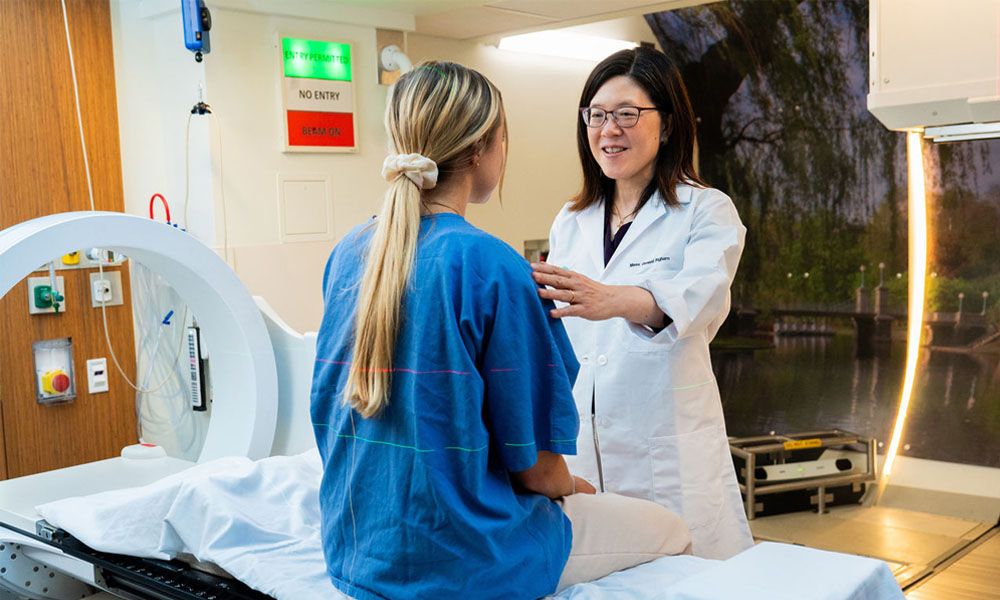
- Proton beam therapy, which precisely targets the tumor, sparing healthy tissue
- 4D-treatment planning and gated radiotherapy, which pinpoints a tumor’s exact location, precisely targeting radiation while minimizing healthy tissue damage
- Intraoperative radiation therapy, which delivers a precise dose of radiation into the tumor during surgery, sparing surrounding tissues
- Intensity-modulated radiation therapy, which delivers precise radiation doses to a tumor or specific areas within it
Excellence in Surgical CareOur GI cancer surgeons have pioneered many now-standard procedures and minimally invasive surgical techniques that ensure rapid recovery and nerve preservation so patients often can retain normal organ function. Our high volume and our surgeon’s advanced laparoscopic skills make each patient’s needs the key factor in choosing the best approach.
We offer one of the few operating rooms specially designed to facilitate complex procedures, allowing surgeons to work side-by-side with multiple surgical subspecialists.
High Volumes Leads to Better OutcomesStudies have demonstrated that high-volume experience results in improved outcomes for patients. As a high-volume GI cancer surgery center, the Gosnell Center leads the Northeast in procedures to treat pancreatic cancer, including the “Whipple” procedure, performing more than 200 pancreatic resections annually. We are also among national leaders for a number of complex procedures to treat esophageal and liver cancer.
Other high-volume complex procedures, some of which are performed only at the Gosnell Center, include:
- Sphincter-sparing rectal cancer surgery, which spares the lower end of the rectum, avoiding permanent colostomies
- Esophagectomy, the removal of the esophagus
- Ex-vivo procedure for liver cancer, a complex procedure for cancer that would otherwise be considered inoperable
- Complex liver resection, a complex procedure to remove cancerous tissue from the liver
- Liver transplantation, a potentially curative treatment for cancer of the liver that is otherwise inoperable. The Mass General Transplant Center’s living-related liver transplant program avoids the lengthy wait times usually associated with organ donation
- Gastric tumor resection
- Total mesorectal excision, the removal of diseased rectum and surrounding tissues
- Local transanal resection (full thickness resection), a procedure that removes anal cancer without making an opening in the skin of the abdomen
Whenever possible, patients are treated with minimally invasive procedures,, which promote faster recovery, such as:
- Laparoscopic tumor resections, to remove early gastric and pancreatic tumors
- Nonsurgical liver cancer treatments, some of which offer treatment for patients who are physically unable to withstand radiation or chemotherapy treatment or have tumors that can't be treated surgically
- Esophagectomy, to remove the esophagus
Contact UsTucker Gosnell Center for Gastrointestinal Cancer
Street address
Street address
Phone: 877-726-5130
About This Program
The Tucker Gosnell Center for Gastrointestinal Cancer at Massachusetts General Hospital is one of the largest and most experienced centers in New England for the treatment and care of patients with gastrointestinal cancers.
Each year, the Gosnell Center treats more than 14,000 patients for cancers involving the:
- Anus
- Colon and rectum
- Esophagus
- Gallbladder
- Liver and bile ducts
- Pancreas
- Stomach
- Small intestine
Patients with liver and bile duct cancers are cared for in the Hepatobiliary Cancer Clinic.
Multidisciplinary Patient CareNew patients are generally seen within one week and sooner if necessary. Each patient has a personal care team of experienced gastrointestinal (GI) cancer specialists – gastroenterologists, endoscopists, diagnostic and interventional radiologists, pathologists, GI oncology surgeons, medical oncologists, radiation oncologists, nurse practitioners and oncology nurses – all of whom exclusively treat patients with GI cancers.
Our multidisciplinary approach to care ensures that patients benefit from a coordinated treatment plan developed by clinicians with highly specialized expertise in all aspects of GI oncology care. We work together with the patient and the referring physician throughout the course of treatment to ensure the best possible outcomes. We also offer a wide range of free educational programs and support services designed to address the physical, psychological and spiritual needs of our patients and their families.
Innovative Approaches to Cancer TreatmentThe Gosnell Center has led the way in developing advanced imaging and diagnostic technologies and cancer therapies. These include complex and minimally invasive surgical procedures and novel chemotherapy agents specifically designed to treat each individual cancer.
Many of these treatment options, such as the Francis H. Burr Proton Therapy Center – the only proton beam treatment facility in the Northeast – are unique to the Cancer Center or are available at only a few other hospitals in the country.
Promising Better TherapiesOur clinical research program in GI cancers is one of New England’s largest, allowing us to bring promising new treatments to patient care as quickly as possible. We are also recognized as one of the nation’s foremost centers for research in GI malignancies. Key research strengths include:
- A nationally recognized pancreatic cancer research program
- Innovative chemotherapy regimens for the treatment of pancreatic cancer
- Clinical trials for the management of colorectal cancers
- Hepatic and bile duct cancer research
Our current research efforts include:
- The investigation of genetic links to pancreatic cancer, building on the Cancer Center’s discovery of the first gene linked to the onset of pancreatic cancer
- Studies related to tumor growth in pancreatic cancer
- Genetic testing to identify cirrhosis patients at highest risk for developing cancer
- Novel experimental therapies for liver cancer
Treating Cancer Through Clinical TrialsWe offer one of the region’s largest clinical trial programs in GI cancers. Some of our current clinical trials include:
- Genetic evaluation for colon, gastric, esophageal and other GI cancers
- Proton beam therapy to treat liver and pancreatic cancers
- Adjuvant treatment for pancreatic cancer
- Antiangiogenesis drugs in combination with radiation for GI cancers
Contact UsTucker Gosnell Center for Gastrointestinal Cancer
Street address
Street address
Phone: 877-726-5130
Colorectal Cancer
Colorectal cancer is malignant cells found in the colon or rectum.
Liver Tumors
Tumors are abnormal masses of tissue that form when cells begin to reproduce at an increased rate. The liver can grow both non-cancerous (benign) and cancerous (malignant) tumors.
Pancreatic Cancer
Pancreatic cancer is the fourth most common cause of cancer death in men and women in the US. Pancreatic cancer occurs when malignant cells grow out of control.
Stomach Cancer
Stomach cancer, also known as gastric cancer, is cancer that starts in any part of the stomach.
HOPES Program
The HOPES Program provides free wellness services, plus education and support workshops for patients with cancer, their families and their friends. Our services focus on helping you take care of your whole self – mind, body and spirit.
Illuminations Program
Illuminations is a rotating art exhibit displayed in the Massachusetts General Hospital Cancer Center. The program aims to enlighten and encourage patients and their loved ones by enhancing our environment of care.
Cancer Center
55 Fruit StreetBoston, MA 02114
Phone: 617-726-5130
Explore your treatment options 
Learn more about the specialized treatment options our experienced medical teams provide for each type of cancer.